
 By
By 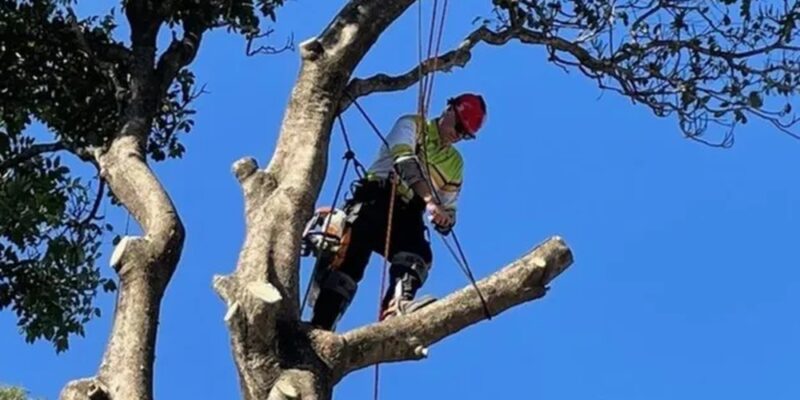
Here’s something most people don’t think about until it’s too late — the Gold Coast’s subtropical humidity doesn’t just grow beautiful trees. It also accelerates the exact internal decay that makes them dangerous. Timber that looks completely solid from the street can be hollow and compromised at the core, and no amount of casual observation from the ground is going to reveal that. Tree loppers in Gold Coast deal with this reality constantly. It’s the kind of environment where delaying proper tree care doesn’t just affect the look of a garden — it creates a genuine, ticking hazard..
Flush Cuts Are a Slow Death Sentence
This is something worth knowing before anyone touches a tree on a property. When a branch is cut flush against the trunk — which looks tidy and is still commonly done by inexperienced operators — it removes the branch collar, the raised ring of tissue that seals a wound after cutting. Without it, the tree has no clean way to compartmentalise the damage. Decay moves inward. On a large, established tree like a Queensland brush box or a Tuckeroo, a series of flush cuts spread across years of amateur maintenance can quietly rot out the structural core while the tree still looks healthy above.
Storm Season Reveals Years of Neglect
The Gold Coast regularly sees significant wind events through summer, and what those storms expose is rarely the fault of the storm itself. Co-dominant stems — where two main trunks grow at a tight angle from the same base — create a natural wedge that collects water, accelerates rot, and splits under load. Professional tree loppers in Gold Coast are trained to spot this early and either remove one stem while the tree is young enough to recover cleanly, or install cabling systems in mature trees to hold the union together under stress. Neither option is something a homeowner notices needs doing until half the tree is lying on the pergola.
Council Rules Protect More Trees Than People Expect
Gold Coast City Council’s Significant Tree Register and vegetation management overlays cover far more species than most residents realise. Poinciana trees, Jacarandas over a certain trunk girth, large Figs, various native species — removing or heavily lopping these without approval can result in penalties that make the cost of a permit look trivial. What makes this genuinely tricky is that the protected status sometimes follows the lot, not just the species, meaning the same tree species on two neighbouring properties can have entirely different legal requirements. Experienced tree loppers check this before quoting, not after.
The Root Zone Is Where Most Damage Starts
Compaction is one of the least discussed causes of tree decline on residential properties. Every time a vehicle parks under a tree canopy, every time soil is piled against a base during landscaping, the root zone loses the pore space that allows oxygen and water to reach the feeder roots. The tree doesn’t die quickly. It declines over several years — a thinner canopy here, some dieback there — and by the time it looks visibly unwell, the root system is already seriously compromised. Lopping a tree in that condition without addressing the underlying cause just accelerates the stress.
Mulch Left On-Site Is Worth More Than Most Realise
There’s a common instinct to have all green waste removed after a lopping job. It looks cleaner. But fresh wood chip mulch from the chipped branches of the same tree is genuinely valuable when spread back around the root zone. It contains the same fungi and microbes that were already present in that tree’s soil environment, breaking down in a way that commercially bagged mulch simply doesn’t replicate. Applied at the right depth — not piled against the trunk, which causes collar rot — it rebuilds soil biology over a single season in a way that’s difficult to achieve any other way.
What the Quote Tells You About the Operator
A quote that arrives without anyone walking the property and actually looking at the tree is a red flag. Proper assessment requires looking at the canopy architecture, checking the base for fungal brackets or soil heave, and understanding what’s nearby — powerlines, structures, neighbouring properties, underground services. A lopper who quotes from a photo or a quick glance from the street isn’t assessing the job, they’re guessing at it. The difference shows up in how the work is carried out and whether anything unexpected becomes the homeowner’s problem to sort out afterward.
Conclusion
The Gold Coast’s climate is genuinely hard on trees — fast growth, intense storms, persistent humidity, and soil that varies dramatically across suburbs. Tree loppers in Gold Coast who understand that environment bring something beyond a chainsaw and a truck. They catch structural problems early, work within council requirements that catch many homeowners off guard, and make decisions about timing and technique that affect how a tree performs for years ahead. A garden looks after itself only up to a point. After that, what happens to those trees depends entirely on who’s managing them and whether they actually know what they’re looking at.







Comments