
 By
By 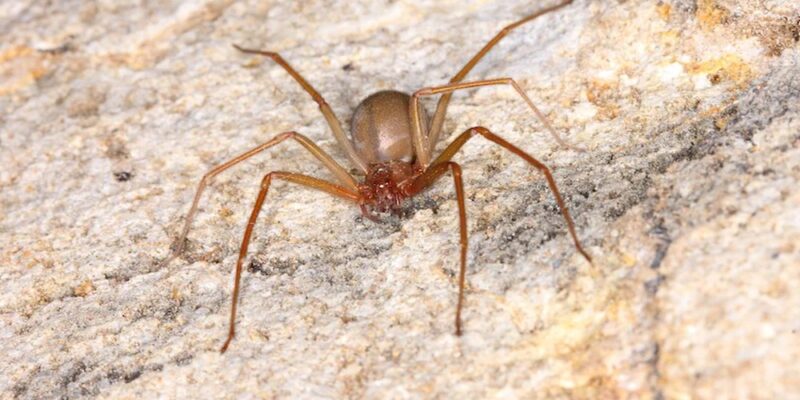
Brown recluse spiders are one of the few household pests in the Midwest that can live in a home for years before anyone realizes they are there. The species is secretive, nocturnal, and deliberately avoids human contact, which is exactly what makes an infestation easy to miss. Kansas City sits near the center of its native range, and homes across the metro, particularly older houses with unfinished basements, attics, and detached garages, often harbor larger populations than residents suspect. Kansas City pest control companies with experience in arachnid identification, including long-operating local firms such as ZipZap Termite & Pest Control in Lawson, see the same pattern repeatedly: a homeowner catches a single spider, assumes it was a loner, and later learns during a targeted inspection that dozens or hundreds are living in the structure.
Why Missouri Is the Heart of Brown Recluse Country
The brown recluse (Loxosceles reclusa) occupies a well-defined native range across the south-central United States. Missouri, Kansas, Arkansas, Oklahoma, and parts of surrounding states sit squarely inside it. Research by Dr. Richard Vetter at UC Riverside, the most-cited authority on brown recluse distribution, documented a single Missouri home in Lenexa that produced more than 2,000 recluses over six months without any household member ever being bitten. That study is worth mentioning because it illustrates how densely recluses can colonize a structure without producing obvious symptoms.
The spider thrives in undisturbed, dry, warm indoor environments. Kansas City’s older housing stock, with wood-framed basements, attics insulated decades ago, and garages with years of accumulated storage, provides nearly ideal habitat.
Identifying a Brown Recluse Correctly
Most suspected recluse sightings in Kansas City turn out to be something else, typically wolf spiders, cellar spiders, or common house spiders. The identification points that actually matter are narrower than the folklore suggests.
The violin marking on the cephalothorax is real but unreliable as a single identifier. Several other spider species carry similar markings, and in young or lightly colored recluses the violin can be faint.
The diagnostic feature is eye arrangement. Most spiders have eight eyes in two rows of four. Brown recluses have six eyes arranged in three pairs (dyads) forming a semicircle. A phone camera with a macro setting can capture this clearly enough to confirm identification.
Other supporting features include uniform tan to medium-brown coloration with no banding or stripes on the legs, a body roughly the size of a dime (including legs), and smooth legs without obvious spines. Anything with bold color patterns, striped legs, or spiny legs is not a recluse.
Where They Actually Live in a Kansas City Home
Recluses do not spin the sprawling webs most people associate with spiders. They produce loose, disorganized silk used mostly as a retreat lining. Finding them means looking where they actually live rather than where other spiders leave obvious evidence.
Common harborage spots include the undersides of stored cardboard boxes, behind baseboards in unfinished basements, inside wall voids, in attic insulation near eaves, in shoes and boots left undisturbed in closets, under beds pushed flush to walls, inside garage storage, in crawl space corners, and in any rarely-moved item along a basement floor. A homeowner who sees one recluse in a living area has almost always missed a much larger population in less-trafficked zones.
Sticky monitor traps placed along basement baseboards, garage walls, and closet corners are the single most reliable way to gauge population size. A home that catches a handful on a dozen traps over two weeks has a mild presence. A home that catches dozens has an established infestation that has likely been present for years.
The Bite Question, in Context
Brown recluse bites are genuinely concerning but genuinely rare. The spider is not aggressive and bites almost always occur when the spider is trapped against skin: inside a shoe pulled on in the morning, between sheets during sleep, or against skin while a homeowner moves stored items.
Most medically diagnosed “brown recluse bites” are misattributed. A 2017 review in the Journal of the American Academy of Dermatology and long-running work by Vetter both found that skin lesions diagnosed as recluse bites in regions outside the spider’s range are almost always something else, commonly MRSA, other bacterial infections, or various dermatological conditions. Within the native range, genuine bites do occur, but they are uncommon relative to the spider’s abundance.
A confirmed bite with worsening local tissue damage warrants medical evaluation, not home remedies. The University of Missouri’s Division of Plant Sciences publishes useful guidance on both identification and bite response for Missouri residents.
What Actually Controls an Established Population
Broadcast spraying a home with consumer insecticides does not work for recluses in any meaningful way. The spider spends most of its life in wall voids, attic cavities, and deep crevices that surface treatments do not reach.
Effective Kansas City pest control for brown recluse combines several components. Thorough inspection, including attic and basement void access, maps the actual population. Targeted dust formulations such as silica or boric acid applied into wall voids, outlet penetrations, and insulation reach the harborage zones. Sticky monitors placed in high-probability corners track population changes over the following months. Reduction in harborage (removing stacked cardboard, sealing clutter into plastic bins, cleaning undisturbed storage areas) cuts available hiding space dramatically.
Treatment is a process rather than a single visit. Most established populations require two to four visits over several months to reach meaningful suppression, and annual follow-up is common.
The Short Version
Brown recluse populations in Kansas City homes are almost always larger and older than homeowners realize. Identification rests on eye arrangement, not the violin mark. Harborage matters more than surface spray. Sticky monitors tell the real story about population size. For homeowners who have seen a recluse in the living space, assumed it was isolated, and kept seeing one every few weeks since, a Kansas City pest control provider with genuine arachnid expertise, such as ZipZap Termite & Pest Control, can map the actual scope of the problem and build a treatment plan around the specific harborage patterns of the structure. Waiting generally means a larger population next year.









Comments