
 By
By 
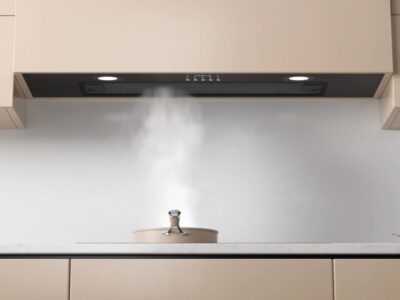
The height at which a kitchen range hood is installed affects virtually every aspect of its performance – capture efficiency, motor noise at working speeds, safety, and visual proportions. Despite this, mounting height is one of the most commonly underspecified details in kitchen planning, often left to last-minute decisions during installation rather than thought through carefully during the design stage.
Manufacturer Guidelines as a Starting Point
Every range hood manufacturer publishes recommended installation heights specific to their products. These guidelines reflect the extraction performance testing conducted at various heights and represent the range within which the motor and airflow design operates as intended. Deviating significantly from these recommendations – particularly mounting a hood too high – can substantially reduce effective capture without any obvious visual indication that performance is compromised.
Standard Height Ranges by Hood Type
For wall-mounted hoods above a standard hob, the recommended clearance between the cooking surface and the bottom of the hood typically falls between 65 and 75 centimetres. Kitchen range hood height requirements differ for gas hobs, where greater clearance – usually a minimum of 75 centimetres – is recommended due to open flame height and heat intensity. Island hoods suspended from the ceiling follow similar principles but must also account for the overhead clearance needed for comfortable cooking.
Balancing Performance and Aesthetics
In many kitchen designs, the visual proportion of the hood relative to the cabinetry and ceiling height influences the preferred mounting position. A hood mounted at the lower end of the recommended range will generally perform better but may feel visually lower than desired in a kitchen with tall units or high ceilings. Choosing a higher motor specification allows installation at the upper end of the recommended range while maintaining adequate extraction – a useful approach in design-led kitchens where visual space is a priority.Appliance specialists such as Ciarra One provide detailed installation guidance alongside their range hood products to help achieve the optimal balance of performance and visual integration for different kitchen configurations.
Safety Clearances for Gas Cooking
Where a range hood is positioned above a gas hob, the minimum clearance requirements serve both a performance and a safety function. Insufficient clearance can expose the hood body and filters to excessive direct heat, accelerating wear and potentially creating a fire risk with heavily soiled grease filters. Always follow the manufacturer’s minimum gas clearance specification, and if in doubt, choose the more conservative end of the recommended range.






Comments