
 By
By 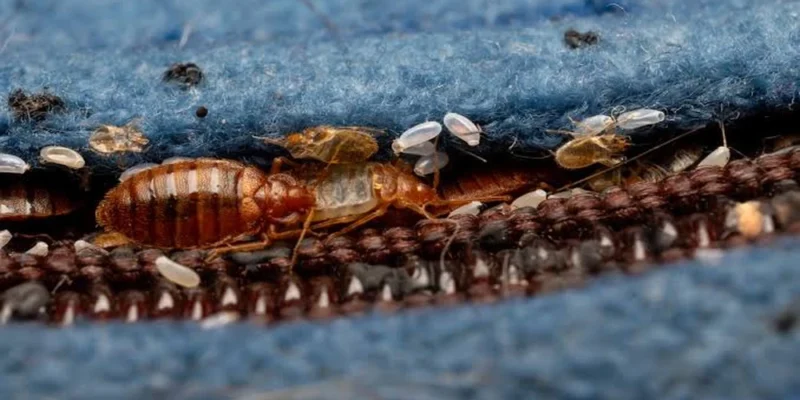
In Denver rentals, the landlord pays. Colorado’s bed bug statute puts the cost of inspection and treatment on the property owner and specifically bars them from passing that bill to a tenant who reported the problem in good faith. Both sides still have obligations, and the disputes that end up in county court almost always come down to documentation rather than who was right about the bugs. Operators like Hot Bugz get pulled into these situations regularly, usually because someone needs a dated inspection report more than they need an argument.
This is general information about how the rules work, not legal advice. Confirm the current statute language or talk to a Colorado attorney before acting on a dispute.
What does Colorado law require the landlord to do?
Colorado’s bed bug provisions for residential rentals, added by House Bill 19-1328 and codified at C.R.S. 38-12-1001 and following, require a landlord who receives notice of a suspected infestation to arrange an inspection by a qualified inspector within 96 hours. A qualified inspector means a pest control professional licensed by the Colorado Department of Agriculture, or a person otherwise trained and authorized to identify bed bugs.
If the inspection confirms bed bugs, the landlord must begin reasonable control measures and cover the cost. The statute also directs landlords to notify tenants in units that may be affected, since bed bugs travel through shared walls, plumbing chases, and electrical penetrations. Treating one apartment while the neighboring unit goes uninspected is the most common reason a building keeps recycling the same infestation.
What is the tenant responsible for?
Tenants have to report the problem promptly and then cooperate with access and preparation. The landlord’s duty is triggered by notice, so a tenant who waits three months while the population builds has weakened their own position considerably.
Cooperation is the part that trips people up. Heat treatment requires removing aerosol cans, candles, medications, houseplants, pets, and heat-sensitive items before the heaters run, and clutter is the leading cause of a thermal job underperforming. A tenant who refuses entry or ignores prep instructions can be found to have obstructed the remedy, which shifts liability. Colorado law also allows a landlord to pursue a tenant for damages where the tenant’s own conduct caused or worsened the infestation, so the “landlord always pays” rule has a real limit.
Put every report in writing. Email or a text with a timestamp is worth far more than a phone conversation nobody can prove happened.
Can a landlord deduct treatment costs from a security deposit?
Not for a routine infestation reported in good faith. Charging inspection or treatment costs back to a tenant runs against the statute’s allocation of those expenses, and Colorado’s security deposit law under C.R.S. 38-12-103 permits withholding only for unpaid rent, damage beyond ordinary wear and tear, or other amounts the lease properly authorizes.
Lease clauses that make tenants responsible for all pest control are common in Denver and frequently unenforceable as applied to bed bugs, because a landlord generally cannot contract out of a duty the statute imposes. If a deposit deduction shows up on a move-out statement, ask for the itemized statement in writing, which Colorado law requires within one month unless the lease sets a longer period up to 60 days.
What if the landlord does nothing after being notified?
Missing the 96-hour inspection window puts the landlord in violation, and a substantial infestation can also implicate Colorado’s warranty of habitability, which requires appropriate extermination in response to vermin infestation. Under the habitability rules revised by HB19-1170, a landlord must begin remedial action within 24 hours for conditions that are materially dangerous or hazardous, and within 96 hours for other qualifying conditions, after receiving written notice.
Practical escalation in Denver looks like this: written notice with photographs, a follow-up written notice citing the statute, then a complaint to Denver 311 or the Department of Public Health and Environment, which handles residential housing complaints and administers the city’s residential rental license program. Do not stop paying rent without legal advice, since Colorado has procedural requirements around rent withholding that are easy to get wrong.
What does treatment actually cost in Denver?
A single room heat treatment generally runs $500 to $1,500, and a whole apartment or small home typically lands between $1,200 and $4,000 depending on square footage, clutter, and access. Chemical programs quote lower per visit but usually need two to four visits across four to six weeks, so totals converge.
Those numbers matter to the dispute because landlords who balk at a one-day thermal job on price often spend more across repeated spray visits while the unit stays hard to rent.
How does Hot Bugz documentation protect both sides?
A written inspection report with dates, unit numbers, and confirmed findings is the single most useful document either party can hold. Temperature sensor logs from a heat treatment record exactly what the room reached and for how long, which answers the question that follows nearly every reinfestation claim: was the original treatment actually adequate.
Ask any operator for the inspection report, the sensor data, and a follow-up inspection at two and four weeks. Landlords use that record to show they met the 96-hour requirement and treated properly. Tenants use it to show the problem existed and when.
Denver landlords carry the cost and the deadline, Denver tenants carry the duty to report and cooperate, and whoever documents better tends to prevail when the two versions disagree. If you are on either side of this right now, get a licensed inspection on the calendar and request a Hot Bugz heat assessment with sensor reporting so the outcome rests on data instead of recollection.









Comments